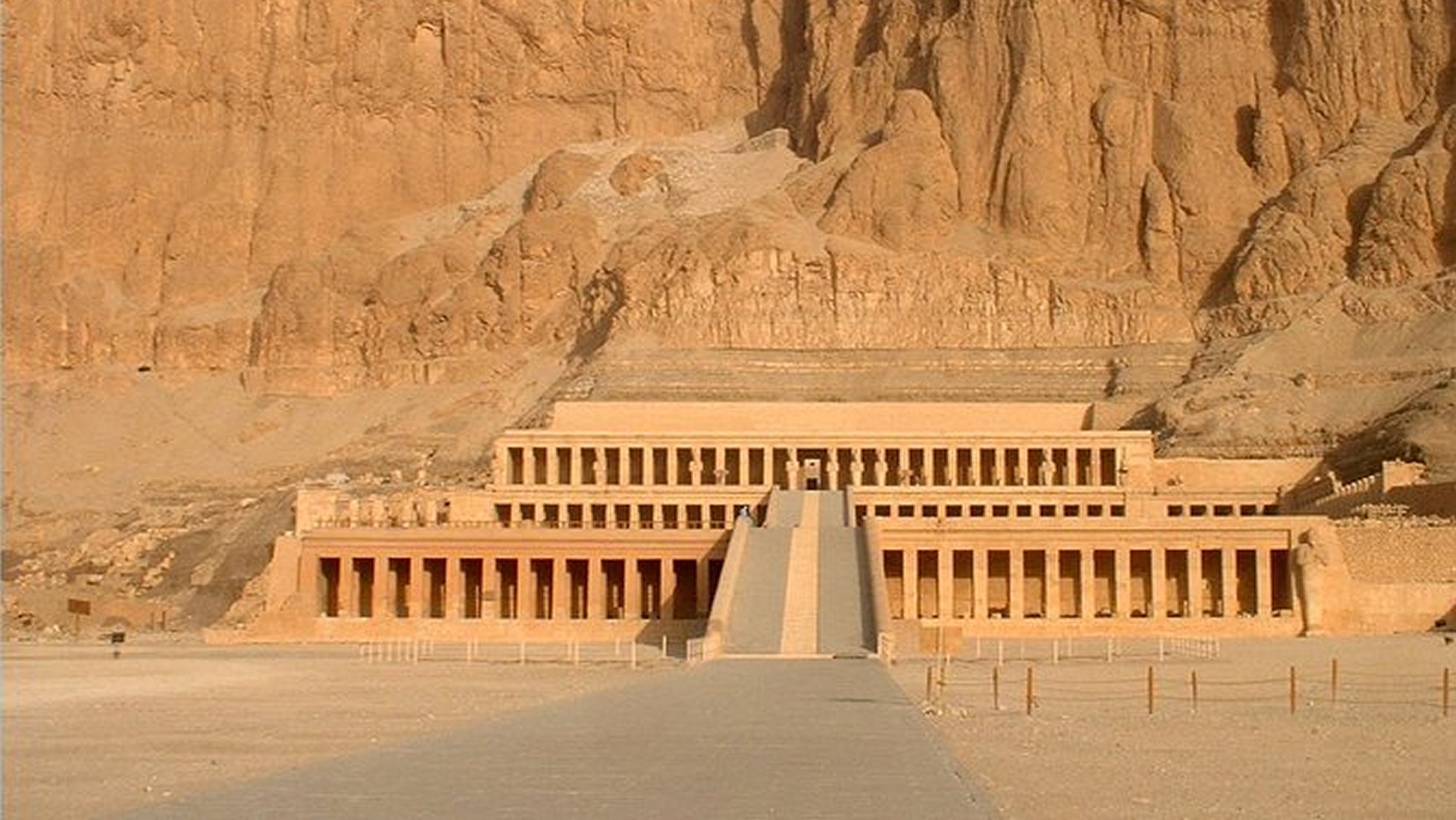
Hatshepsut's Mortuary Temple
In terms of visual impact, nothing matches the Temple of Hatshepsut. This multi-storey structure is located along the limestone cliffs behind the Nile Valley, in a spectacular panorama. It is located precisely under the cliffs of Deir el-Bahari, on the western bank of the Nile, near the Valley of the Kings in Egypt, opposite Luxor. The uniqueness of its structure reflects that of the pharaoh who wanted its construction.
The funerary temple of Hatchepsut is also known by the name of Djeser-Djeseru, or "Holy among Holies". The real peculiarity is that unlike almost all pharaohs, Hatshepsut was a woman. She is one of the very few women in the history of ancient Egypt to hold the position of pharaoh, the second after Queen Nefrusobek of the 12th dynasty.
The reign of Queen Hatshepsut
Hatshepsut came to power during the New Kingdom following the death of first her father, Tuthmose I, and then her half-brother and husband, Tuthmose II, who had ascended to the throne after her first. In the beginning she ascended the throne as sovereign regent in function of the son of her husband, who had, however, another wife, Tuthmose III. Tuthmose III was just two years old when she ascended the throne, but with great skill and political skills Hatshepsut managed to remain at the helm of the kingdom and maintain power until her own death.
The funerary temple is dedicated to the solar deity Amon-Ra, and is located near the temple of Mentuhotep II, both temples were considered in the past as a great source of inspiration and, later, as a source of building material for new projects. Hatshepsut's temple is considered one of the "incomparable monuments of ancient Egypt".
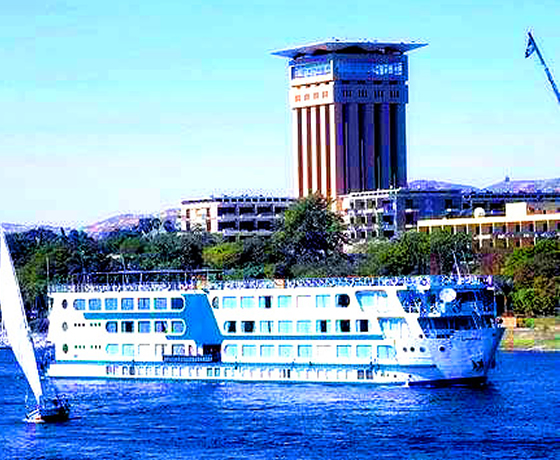
The trip to Egypt is a dream come true for those who want to try a new experience and explore the secrets of the pharaonic history of the queen of Hatchepsut, Egypt Holiday is organizing specialized tours to Luxor and Aswan with our guide who speaks Italian, English, French, Spanish or other language on request, Book now and take a look at our packages for an Egypt tour to most of the most tourist cities.
The statues representing the sovereign are very famous, with the typical headdress reserved for pharaohs, usually male. Hatshepsut's fame is not only due to the representation of the only sovereign who was capable of gaining such power and remaining in the government of Egypt, but also for the good governance that characterized her period of regency and which made her a just and beloved sovereign , as expressed in the depictions of the temple dedicated to her. The queen-pharaoh also commissioned the building of various temples, including that of Karnak.
The statue of Hatchepsut's mortuary temple
When it was discovered in the mid-19th century, the temple was in a state of complete ruin, mainly due to the repeated devastations ordered by Tuthmose III, almost certainly as an instrument of revenge against the memory of his stepmother. The site was converted into a monastery during the first centuries AD, which contributed to its further deterioration. As a result, the temple was the subject of intensive restoration activity during the 20th century. Most of the columns present today are not original and many of the bas-relief wall paintings have not been adequately recovered. For this reason the temple may be rather disappointing, especially compared to its popularity as a tourist destination.
One of the most famous moments of Hatshepsut's propaganda, with which the queen intended to self-legitimize her power, is the myth about her birth. She herself had the details of her mythological birth immortalized in a large iconographic cycle depicted on the walls of the temple, so as to indisputably justify her rights to the throne. The composition of the images and texts of this wonderfully depicted myth would evoke the consecration with which the god Amon, protector of the dynasty, according to this propaganda the true father of Hatshepsut, would have designated her from the height of her authority to reign.
Our Egypt offers are varied and many and there are many ideas and many packages for visiting Egypt and taking a cruise on the Nile.

The Tombs of the Nobles
Most of what you can visit today relating to Ancient Egypt is dedicated exclusively to the Pharaonic royal house. The monumental architecture that the sovereigns of Egypt commissioned throughout the history of this grandiose civilization has stood the test of time better than any other find or testimony, both for their imposing dimensions and for their creation carved from the rock. The Tombs of the Nobles constitute an interesting destination among the sites on the western bank, a valid alternative to the monotony of the triumphal image of the conquest of the pharaohs and to the representations of eternal life after death in the temples and royal tombs.
Located between the Ramesseum and the Temple of Hatshepsut, these funerary complexes are excavated into a rocky slope and dedicated to officials, governors and other figures of the noble class. Inside them you can admire valuable and realistic depictions on themes such as nature and daily life, which offer us an authentic look at the lifestyle of the population during the Ancient Egyptian era.
Visiting this site can prove difficult in the absence of a guide, also due to the poor indications on the site, but it remains in any case a pleasant escape from the more crowded destinations of the Valley of the Kings and the other main temple complexes. A separate ticket must be purchased at a special office on the west bank for each tomb you wish to visit.
If you want to take the opportunity to visit Egypt, | Click here to see our Travel Packages for the whole country.
Colossi of Memnon - The statues that sang at dawn
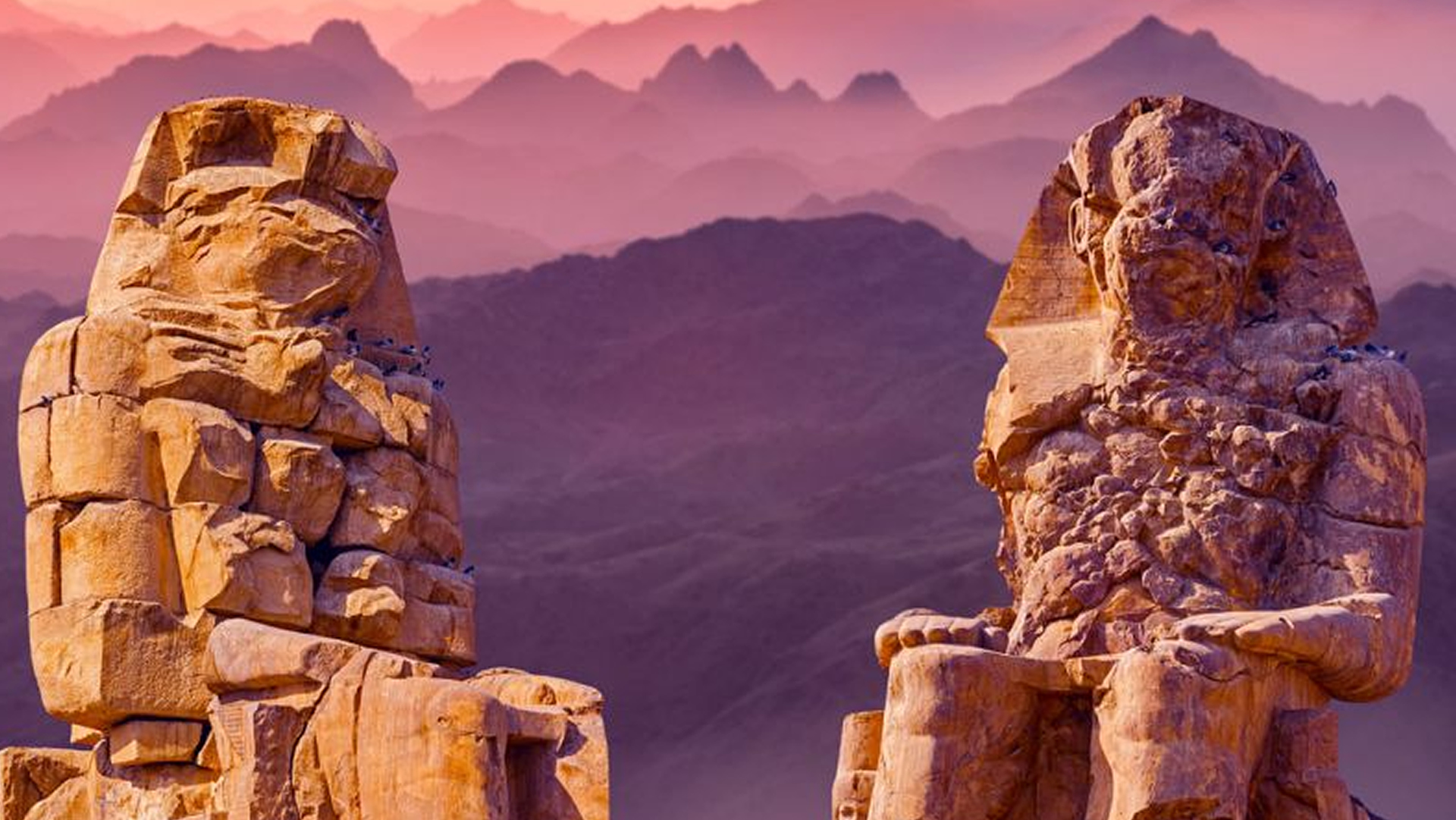
The Colossi of Memnon are, precisely, two colossal stone statues which, placed in front of the city of Luxor, on the western bank of the Nile, have been observing its slow flow for millennia with their gaze turned towards the rising sun.
These two gigantic statues, 59 feet high, can be identified by visitors from the eastern bank, they have been known since ancient times for a mysterious sound emitted by one of them at sunset. A poetic legend identifies in the sound the song of Eos (the Greek goddess of dawn), mother of Memnon, hence the name of the statues, who cried tears of dew every day for the death of her son, killed at the hands of Achilles during the Trojan War. Memnon was a character in Greek mythology, born from the goddess and Titho (a prince of Troy), he was the King of Persia and Ethiopia, he took the side of the Trojans in the last year of the Trojan War.
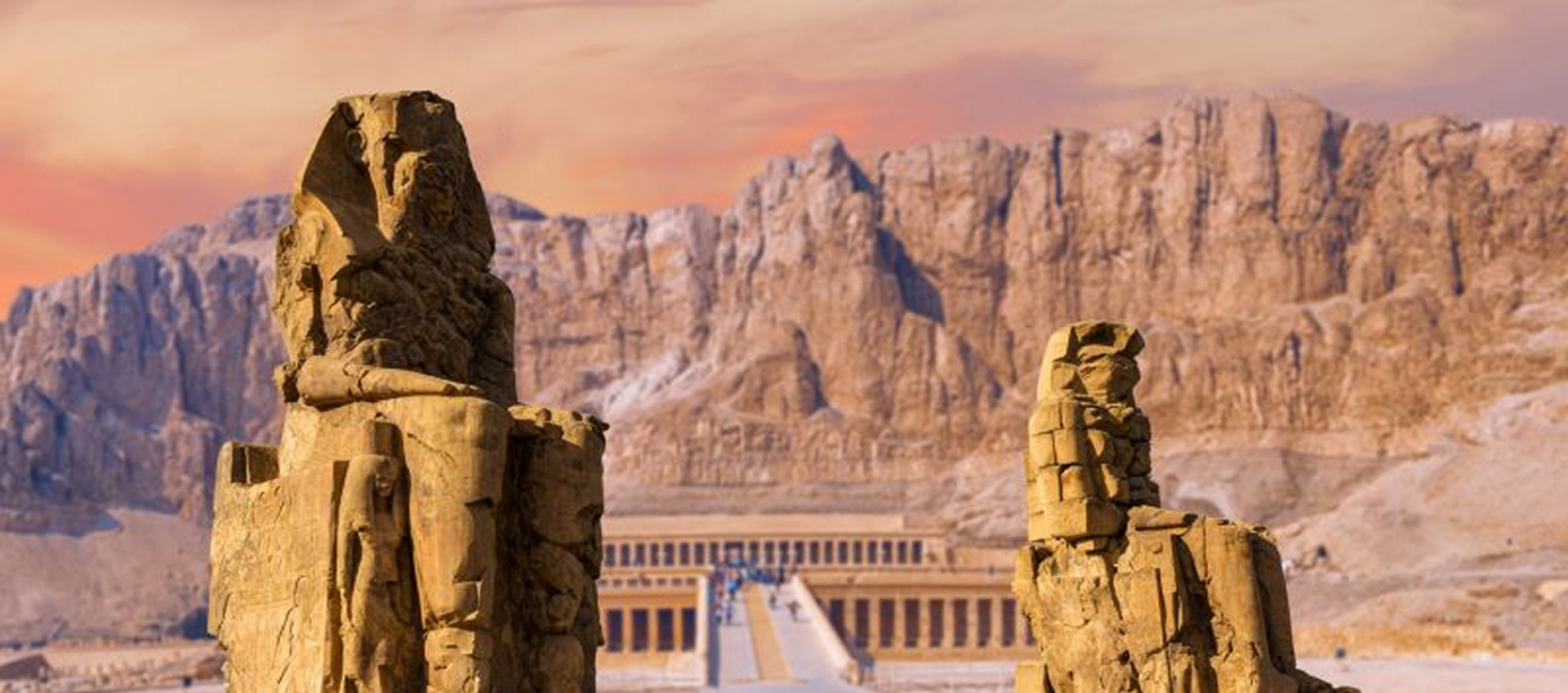
The Colossi of Memnon on the West Bank of the Nile in Luxor and the earthquake that caused the destruction
In 27 BC an earthquake caused the partial destruction of one of the Colossi: the upper part collapsed, while the lower part only suffered cracks, following this event the peculiar music began to be heard, coming from the lower half of the statue. It is believed that this sound was caused by the contact of air currents with the porous surface of stones heated by sunlight. Probably the increase in temperature by evaporating the dew produced a sound similar to a 'melody', but there is no way to verify this since the sound stopped producing hundreds of years ago, following a restoration.
Colossi of Memnon Sound
Since ancient times, Greek and Roman travelers went to the place to listen to music. The first testimony is from the Greek historian and geographer Strabo, who heard the legendary melody during a journey in 20 BC. The phenomenon was also described by the Greek Pausanias and the Romans Tacitus and Juvenal, many travelers and even illustrious emperors went to visit this amazing attraction. Around 199 the emperor Septimius Severus had the statue restored and it stopped singing forever.
The sound determined the name of the statues, as it led the Greeks to believe that they represented the immortal Memnon, in reality the statues represent Amenhotep III, a ruler who reigned in Egypt about 3,400 years ago and his wife, Tiye. The statues presided over the entrance to a large temple complex that was believed to rival Karnak in size.
The sovereign and his wife are depicted in a seated position, with their hands resting on their knees and looking east, in the direction of the Nile. Each pharaoh of the New Kingdom had a sacred building built in his honor, when he was still alive, to affirm his divine nature. The Colossi of Memnon were located at the entrance built by Amenhotep III. It seems that that of Amenhotep, with its 35 hectares of surface area, was the largest and richest temple in the whole of Egypt, so much so that not even rulers such as Ramesses II and Ramesses III later managed to match such majesty.
Two colossal statues of Pharaoh Amenhotep III reassembled
Amenhotep III, who ruled during the New Kingdom at the height of Ancient Egyptian history, is considered one of Ancient Egypt's most prolific builders. This temple would have been the most significant of his architectural projects, but unfortunately only a few ruins remain standing today. Archaeologists believe that the structure was rapidly damaged due to repeated looting and due to its location not conducive to conservation, the colossi and the ruins of the ancient temple are in fact located within an alluvial plain of the Nile.
The limestone used for its construction was consequently eroded by centuries of exposure to periodic floods. So today unfortunately, with the exception of the Colossi, almost nothing remains of the temple, whose foundations were corroded year after year by the flooding of the Nile. It is even thought that the enormous complex was already compromised in the Pharaonic era, and that some stone blocks from the temple were already used for the construction of other buildings. Only the two large statues were spared, but they have reached the present day in a serious state of conservation.
Concluding the article of the giants of Memnon, we would be happy to inform you that we have tailor-made packages for a trip to Egypt with a cruise on the Nile to Luxor and Aswan. Book your dream trip now.
 Hi, Lenore